The Moving Day Amazon Checklist: 40 Supplies Every Move Actually Uses
Quick answer: A typical 1,500 to 2,500 square foot move needs supplies across nine phases: pre-move purge, basic packing kit, specialty packing, protection materials, moving day equipment, the first-night box, long-distance specifics, new-home week one, and settling in. Most items run under $20 and the full kit costs about $300 to $450 depending on what you already own. The most-forgotten items are tape (buy 12 rolls), sharpies (buy a 12-pack), and a well-built first-night box.
Twelve years on the trucks taught me one thing about moves: the customers who ran out of tape at 7pm on packing-Friday were the same customers who realized at 9pm they did not have a single sharpie in the house, then at 11pm went looking for paper towels in a half-packed kitchen and gave up. None of that is the actual hard part of moving. The actual hard part is moving heavy stuff long distances. The supplies are the easy part. People just keep underestimating how much of each thing they need.
So this is the consolidated Amazon order I would put together for somebody if they asked me what to buy. The list assumes a typical 1,500 to 2,500 square foot home and a hire-the-movers setup, but it scales up or down. Most items are under $20. The full kit runs about $300 to $450 depending on how much you already have on hand.
How to use this list
The list is organized by phase of the move, not by category, because that is how a move actually unfolds. Pre-move purge. Packing. Specialty packing. Protection materials. Moving day. First-night box. Long-distance specifics. New-home week one. Settling in.
For each item I have linked to an Amazon search rather than a specific product. Sizes and quantities vary by household. The search returns the current bestsellers, which is usually a fair proxy for "the thing that works for most people."
Print this page or save the link. Walk through it twice: once at the 30-day mark, once at the 7-day mark. Skip what you already own.
Phase one: pre-move purge (4 to 6 weeks out)
 Thank you for using our links, they keep our doors open.
The cheapest box is the one you do not pack. The single biggest cost lever on a move (especially a long-distance move billed by weight) is what you decide not to bring. Spend a weekend on a true purge before a single box gets taped. We covered the timing in our 30-day moving day checklist; this is the supply list for the purge weekend itself.
- Heavy-duty contractor trash bags. 3 mil rating minimum. Regular kitchen bags blow out in the garage.
- Donation tracker / receipt book. For Goodwill or Salvation Army drop-offs. Tax deductible if itemized.
- Garage sale price stickers. Pre-printed in $0.25 increments. Save an hour over hand-writing.
- Storage bins for "deal with later". Clear bins, 27 to 50 quart, for items you are unsure about. Date them and revisit in 90 days.
- Label maker. Worth the $25 if you are sorting more than 10 bins. Faster than a sharpie and the labels do not smudge.
Phase two: the basic packing kit (3 weeks out)
 Thank you for using our links, they keep our doors open.
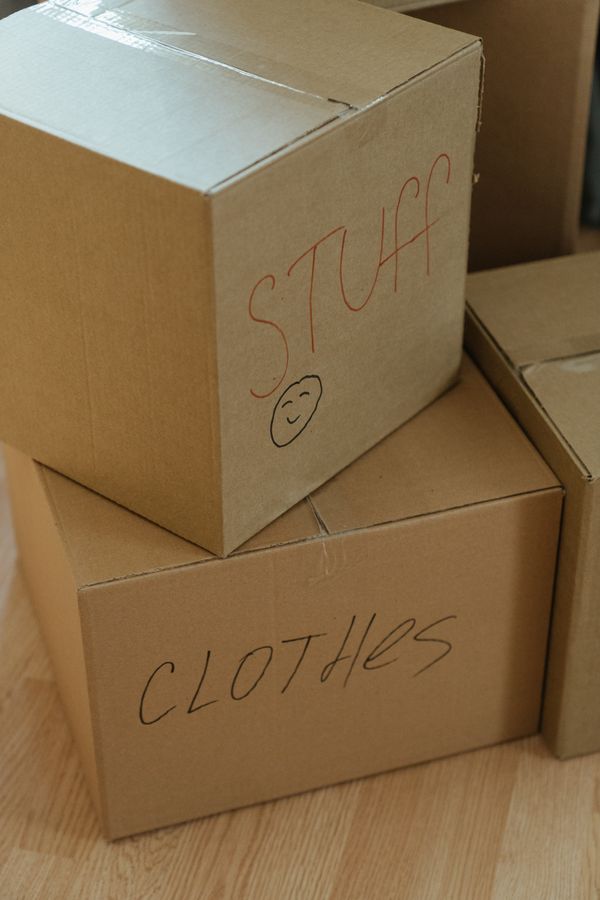
Boxes are where most people overspend without realizing it. The U-Haul pricing structure is convenient but expensive, and Amazon's variety packs almost always cost less per box, especially in bulk. We did the full price comparison in our box kits guide. In short: Amazon variety packs at the 30 to 40 box level beat U-Haul, and wholesale beats both once the move gets big.
Worth knowing before you fill an Amazon cart with cardboard: a wholesale kit is now the cheapest delivered option. BoxEngine's 3-4 room kits run $117 to $164 with free shipping over $35, against $160 to $220 for the equivalent Amazon assortment. The catch is box count, since those kits hold 36 to 42 boxes rather than the 50 to 65 a three-bedroom move needs, so plan on topping one up. Everything else in this phase (tape, paper, markers) is still easiest to buy in one Amazon order.
- Moving boxes variety pack (small/medium/large). The 30-box assortment is the right size for a 1-bedroom; 60-box for a 2-3 bedroom. Bulk-pack pricing is much better than buying singles.
- Heavy-duty packing tape (bulk). Buy 12 rolls minimum. You will use more than you think. The 2.7 mil thickness is the workhorse.
- Tape gun / dispenser. The single biggest time-saver in packing. Cuts taping time by 60 percent.
- Black sharpies (12-pack). You will lose them. Buy in volume.
- Color-coded room labels. One color per room. Movers can sort at the new house in seconds without reading every box.
- Newsprint packing paper (bulk). Unprinted. 10 to 25 lb bundles. The default fragile-wrap and void-fill. If you are already ordering boxes from a moving-supply house, the 25 lb bundle there is $43.95 and rides along on the same free shipping. Paper is heavy, so consolidating the order is usually worth more than the per-pound price.
Phase three: specialty packing (2 weeks out)
 Thank you for using our links, they keep our doors open.
The specialty boxes are where rookie movers cut corners and pay for it later. A wardrobe box at $25 saves an hour of un-hanging and re-hanging an entire closet. A dish pack saves $400 in broken china. A mattress bag saves the mattress from showing up dirty in the new bedroom. None of these are optional on a serious move.
- Wardrobe boxes with hanging rod. One per 3 feet of closet. Move clothes still on hangers. Major time saver.
- Dish pack box with cell dividers. The right way to pack stemware, plates, and china. Pays for itself the first time.
- Mattress bag (Queen / King / Twin). Buy the size you have. Heavy-duty plastic only; the thin ones tear on the truck.
- TV moving box. Adjustable boxes that fit 32-65 inch flat screens. Almost always cheaper than buying them through the moving company.
- Mirror / picture frame box. Telescoping cardboard box for framed art and mirrors.
- Lamp box (tall and narrow). Standing lamps go in these and arrive intact.
- Dish foam pouches. Slip between every plate. Never see a chipped rim.
Phase four: protection materials
 Thank you for using our links, they keep our doors open.
The protection layer is what separates a clean delivery from a damaged one. Moving companies will charge you double for the same materials at the truck. Buy ahead.
- Bubble wrap (large roll). 175 ft minimum. Small bubble for electronics, large bubble for picture frames.
- Stretch wrap (industrial). The clear plastic film for keeping drawers from sliding open and for grouping odd-shaped items. 18 inch is the right width for furniture.
- Moving blankets (4-pack). The padded quilted ones. Even with hired movers, having two of your own to throw over the dining table corners is wise.
- Furniture corner protectors. Foam or plastic L-brackets that fit on corners. Protect from doorway damage.
- Foam pouches for glassware. Pre-formed pouches. Slide a wine glass in, slide it into the dish pack. Done.
Phase five: moving day equipment
 Thank you for using our links, they keep our doors open.
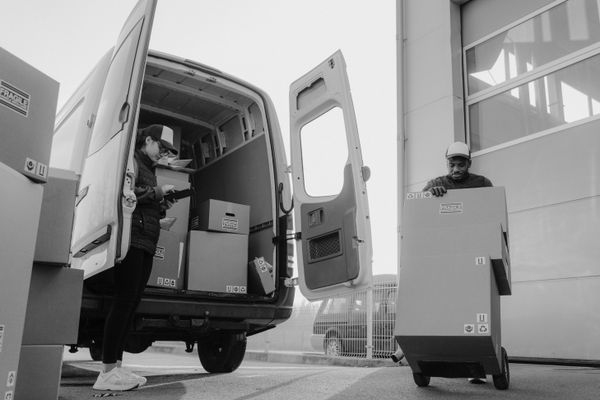
If you hired pros, they bring most of this. If you did not, this section is the difference between a 4-hour move and an 8-hour move with a strained back at the end. Buy or rent. Renting from Home Depot is competitive on dollies; Amazon is competitive on everything else.
- Appliance dolly / hand truck. 600+ lb capacity. Stair-climbing if you have stairs. The single most useful piece of equipment for a DIY move.
- Furniture sliders (4-pack). The plastic discs that go under heavy furniture legs. Slide a sofa across the room with one finger. Magic.
- Moving straps / shoulder dolly. The leverage straps that let two people carry a refrigerator without breaking their backs. About $25.
- Heavy-duty work gloves (multi-pack). Leather palm. One pair per person, plus a spare.
- Box cutters (3-pack). Retractable. You will lose two on moving day.
- Moving truck ramp. If renting a truck without a built-in ramp. Otherwise skip.
Phase six: the first-night box
 Thank you for using our links, they keep our doors open.
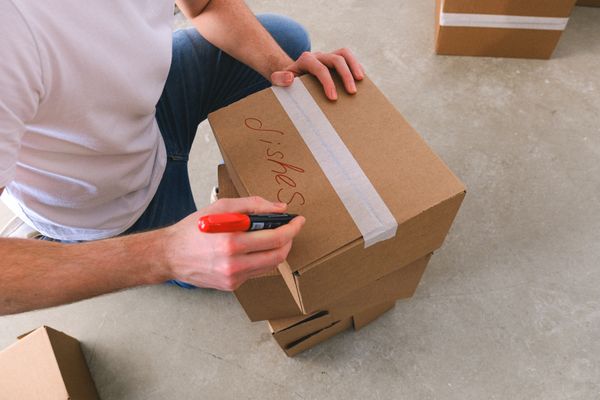
This is the box that goes on the truck last so it comes off first. Items the family needs in the first 24 hours at the new place. Almost every customer I worked for either skipped it (and regretted it that night) or built it well (and was glad). Build it.
- Toilet paper (12-roll Costco-style pack). Sounds dumb. Is the most-thanked first-night item.
- Paper towels (bulk). 8-roll minimum. Cleaning surfaces is the first job in the new house.
- Bedsheets in vacuum bag. Sheets compressed into a single bag, fits in the first-night box. Not crumpled at the bottom of a wardrobe.
- Phone chargers and a power strip. Strip with USB ports. Outlets in the new house are never where you need them on night one.
- Flashlight or work light. Rechargeable LED. For the inevitable basement-fuse-box trip on night one.
- Trash bags + a small dustpan. The first thing the new house needs is to be swept.
- Disposable plates / utensils for two days. Real dishes are still in boxes; you do not want to find them tonight.
- Basic toiletries kit. Toothbrush, toothpaste, shampoo, soap. The travel kit is sized right for the first-night box.
Phase seven: long-distance specifics
 Thank you for using our links, they keep our doors open.
If you are driving the load yourself or convoying behind the truck, the long-distance kit is its own short list. We covered the dash cam choice specifically in our long-distance dash cam guide; the rest is here.
- Dash cam (front + rear). For evidence in case anything happens en route. Critical if driving a rented box truck cross-country.
- Road trip emergency kit. Jumper cables, flashlight, first aid, reflective triangle. Costco sells one; Amazon's is the same product cheaper.
- Cooler with wheels. For perishables and drinks across multiple days.
- Paper road atlas. Cell service drops in parts of the country. The Rand McNally atlas is unchanged from 1990 and still works.
- Pet travel crate / carrier. If you have a dog or cat in the car. The vehicle-secured crates beat loose-in-back-seat for safety.
- Tire pressure gauge + portable inflator. A loaded vehicle stresses tires. Check pressure twice a day on a multi-day drive.
Phase eight: new-home week one
 Thank you for using our links, they keep our doors open.
Week one in the new house has its own short list. Things you will need in the first seven days that are not in the moving boxes anywhere. Stock these before you arrive.
- Basic homeowner toolkit. Hammer, screwdriver set, pliers, tape measure, level, allen wrenches. The 100-piece set is plenty.
- Cordless drill. For furniture assembly, hanging shelves, and tightening every cabinet hinge that loosened in transit.
- Cleaning supplies starter pack. All-purpose, glass cleaner, sponges, dish soap. Pre-assembled kits exist; cheaper to assemble your own from a Costco run.
- Broom, dustpan, and Swiffer. The previous owner cleaned for the photos, not for moving day.
- Shower curtain liner. The previous owner took theirs. You will discover this on morning two.
- Trash cans (kitchen + bathroom). Yours are still on the truck. Order ahead so they arrive day one.
- Mailbox key set. If the previous owner did not leave them. Hardware store can also cut.
Phase nine: settling in (weeks 2 to 4)
 Thank you for using our links, they keep our doors open.
Once the boxes are unpacked, the house has a few categories of "I should really set this up" that quietly never get done unless you do them in the first 30 days. Do them in the first 30 days.
- Smart leak sensors (multi-pack). Under the kitchen sink, behind the toilets, by the water heater. Cheap insurance against a flood you would not notice for a week.
- Smoke + CO detectors. Replace whatever the previous owner left behind. Lifespan is 10 years; you do not know when they were installed.
- Fire extinguisher (kitchen). Every kitchen needs one. ABC-rated.
- Smart locks (front + back door). Re-key by re-coding instead of a $200 locksmith call. Many work with Apple Home and Google Home for guest access.
- Address numbers (visible from street). Required for emergency response and for everybody who delivers anything for the next decade.
Frequently Asked Questions
How much do moving supplies cost for an average house?
For a typical 1,500 to 2,500 square foot home, budget about $300 to $450 for the full supply kit, less if you already own dollies, tools, or storage bins. Most individual items are under $20. Boxes are the biggest single line; buying an Amazon variety pack or wholesale beats buying box-by-box at the moving company.
What should go in a first-night moving box?
Pack the things your household needs in the first 24 hours at the new place: toilet paper, paper towels, bedsheets, phone chargers and a power strip, a flashlight, trash bags and a dustpan, disposable plates, and a basic toiletries kit. Label it OPEN FIRST and load it on the truck last so it comes off first.
How many rolls of packing tape do I need to move?
Buy at least 12 rolls for a two-to-three-bedroom move. Almost everyone underestimates this and runs out mid-pack. Pair the tape with a tape gun, which cuts taping time by more than half and is the biggest single time-saver in the packing phase.
When should I start buying moving supplies?
Start at the 30-day mark with the pre-move purge supplies, then order boxes and packing materials around the 3-week mark so they arrive before you need them. Amazon shipping can take 2 to 5 days, so ordering late is the most common reason people pay full retail at the truck on packing day.
Is it safe to buy used moving boxes?
Used boxes are fine for non-fragile items if they are clean, dry, and structurally sound. Avoid soft or previously crushed boxes for anything heavy or breakable. The U.S. Federal Trade Commission's moving guidance is worth a read alongside your supply list, since a documented inventory and proper packing both factor into any damage claim with a hired mover.
A small note on how this list is funded
Moving Crews does not run ads, sell email lists, or paywall any of our planning content. The site is funded entirely by the small commissions Amazon and a few other partners pay us when readers buy through our links. Buying any of the items above through our search links keeps the rest of the site free to read. No popups. No newsletter walls. No "create an account to continue" friction. We appreciate it.
If you find an item your move needed that is not on this list, send it to us and we will add it.
Related guides
- Moving Day Checklist: 30 Days Out, 7 Days Out, Day Of. The timing companion to this shopping list.
- Moving Box Kits 2026: U-Haul, Amazon, and the Cheap Bulk Option Nobody Mentions. The detailed price-per-box analysis behind the boxes recommended above.
- Hire Movers vs DIY: The Real Math. For deciding whether to buy or rent the moving day equipment in phase five.
- Dash Cam for Long-Distance Moves: 2026 Buyer Guide. The detailed companion to the long-distance phase above.
- FMCSA Protect Your Move. If you are hiring a mover rather than going DIY, the federal consumer-protection checklist on screening and your rights as a shipper.